
0011.digital can design, build, and optimize Unbounce landing pages for your campaigns, including setup, integrations, and A/B testing.
Contact us.Choosing the right tool to build your landing pages can feel like a big decision. You want something that looks good, works well, and helps you get more customers. For a long time, Unbounce was the go-to option for many. But things change, and now there are other builders out there that might be a better fit for you. This article looks at Unbounce versus others, comparing what they offer so you can make a smart choice for your business in 2025.
Key Takeaways
- When looking at Unbounce versus others, consider how easy the builder is to use and how much control you have over the design.
- The variety and quality of templates available, along with how much you can change them, are important factors in landing page creation.
- Tools for testing different page versions (A/B testing) and using AI to help create content or optimize pages are becoming standard features.
- Think about how well the landing page builder works with your other marketing software and how fast your pages load on phones and computers.
- Compare the pricing plans carefully, looking at visitor limits and what you get for your money to ensure a good return on investment.
Understanding The Core Of Landing Page Builders
What Constitutes An Effective Landing Page?
An effective landing page is more than just a pretty design; it’s a focused digital space built with a single objective in mind. Think of it as a highly specialized salesperson for your business. Its primary job is to guide a visitor toward a specific action, whether that’s signing up for a newsletter, downloading an ebook, or making a purchase. To achieve this, it needs to be clear, concise, and compelling. This means having a strong headline that grabs attention, persuasive copy that speaks directly to the visitor’s needs, and a prominent call-to-action that makes it obvious what you want them to do next. Visuals should support the message without being distracting, and the overall design should feel trustworthy and professional.
The most effective landing pages remove distractions and present a clear path for the visitor, making it easy for them to take the desired next step.
The Role Of Landing Page Builders In Marketing
Landing page builders have become indispensable tools for marketers because they simplify the creation and optimization of these focused web pages. Before these tools, building a custom landing page often required coding knowledge or hiring a developer, which could be time-consuming and expensive. Now, with drag-and-drop interfaces and pre-designed templates, anyone can create professional-looking landing pages quickly. This speed and ease of use allow for more experimentation and faster campaign launches. They are central to many marketing strategies, from running paid ad campaigns to nurturing leads through email sequences. A well-built landing page can significantly improve your conversion rates, meaning more leads or sales from the same amount of traffic. This is why having a solid website development partner can be beneficial.
Key Features To Prioritize In Your Selection
When you’re looking for the right landing page builder, it’s easy to get overwhelmed by all the options. However, focusing on a few key features will help you make a smart choice. Here’s what you should consider:
- Ease of Use: You’re using a builder to avoid complex coding. The interface should be intuitive, ideally with a drag-and-drop editor that lets you see changes in real-time.
- Template Variety and Customization: A good builder offers a range of professional templates that you can adapt to your brand and campaign. Look for mobile-responsive designs.
- A/B Testing Capabilities: To know what works best, you need to test different versions of your page. Built-in A/B testing tools are vital for optimizing conversions.
- Integration Options: Your landing page needs to connect with your other marketing tools, like email marketing services and CRMs. Check for compatibility.
- Analytics and Reporting: You need to track performance. Features that show you conversion rates, traffic sources, and visitor behavior are important for making improvements.
Unbounce Vs Others: A Feature-By-Feature Breakdown
When you’re looking to build landing pages that actually convert, the tool you choose makes a big difference. Unbounce has been a go-to for many marketers for a while, known for its robust features. But the landscape is always changing, and other platforms are stepping up with their own strengths. Let’s break down how Unbounce stacks up against the competition in a few key areas.
Ease of Use and Editor Flexibility
Unbounce offers a drag-and-drop editor that gives you a lot of control. You can move elements around pretty much anywhere on the page, which is great for getting the exact look you want. It also has an AI-powered builder that can suggest templates and copy based on your business. However, some users find that the mobile editor can be a bit tricky, sometimes requiring separate adjustments from the desktop version. Other builders might offer a slightly simpler interface, especially if you’re just starting out. For instance, some platforms are designed with absolute beginners in mind, making the initial learning curve almost non-existent.
Template Variety and Customization Options
Unbounce provides over 200 templates, which are generally well-designed and professional. The flexibility in its editor means you can tweak these templates extensively. However, a limitation some have noted is that you can’t easily mix and match sections from different templates to create a unique page. You’re mostly working within the structure of a chosen template. While Unbounce’s templates are for full pages, other builders might offer more modular template components, allowing for greater creative freedom in combining different elements.
A/B Testing and Conversion Optimization Tools
This is where Unbounce really shines. It offers automated A/B testing, allowing you to easily create variants of your pages and see which performs better. Their Smart Traffic feature uses AI to direct visitors to the page version most likely to convert them. Other tools also provide A/B testing, but Unbounce’s integration and AI-driven optimization are quite advanced. Some platforms, however, might not include A/B testing on their most basic plans, which is something to watch out for.
AI Capabilities for Enhanced Page Creation
AI is becoming a big part of landing page building, and Unbounce is incorporating it, particularly with its AI Smart Builder. This can help generate page ideas and copy quickly. Newer platforms are also heavily leaning into AI, sometimes offering more advanced AI features like AI image generation or AI-driven copy refinement that go beyond basic suggestions. The speed at which AI can now generate entire pages from a simple prompt is impressive, potentially cutting down creation time significantly.
Choosing the right landing page builder involves looking beyond just the features. You need to consider how those features fit your workflow, your team’s skill level, and your budget. What works perfectly for one business might be overkill or insufficient for another.
Here’s a quick look at how some platforms compare on key aspects:
| Feature | Unbounce | Leadpages | Landing |
|---|---|---|---|
| Ease of Use | High (Drag-and-drop, AI builder) | Very High (Simple drag-and-drop) | Very High (AI-first, fast creation) |
| A/B Testing | Yes (Automated) | Yes | Yes |
| AI Features | Smart Traffic, AI Builder | AI Copywriter, AI Designer | Advanced AI for copy & design |
| Template Customization | High flexibility, limited section mix | Good, categorized templates | High, AI-assisted |
| Integrations | Broad (Google Ads, FB, Mailchimp etc.) | Good (Zoho, FB, Constant Contact etc.) | Growing list |
When evaluating these tools, remember that integrations are key. You’ll want your landing page builder to connect smoothly with your existing marketing tools, whether that’s your CRM, email marketing service, or analytics platform. A tool like WordPress, for example, can be a great foundation for your website, and landing page builders often offer plugins to integrate with it.
Exploring Top Unbounce Alternatives
While Unbounce has been a go-to for many, the landscape of landing page builders is always changing. You might be looking for something that fits your budget better, offers more advanced AI features, or simply has a different workflow. It’s smart to see what else is out there. Let’s take a look at some of the top contenders that could be a great fit for your business.
Landing: The AI-Powered Contender
Landing has quickly made a name for itself, especially if you’re keen on using artificial intelligence to speed up your page creation process. Imagine turning a basic idea into a live landing page in just a few minutes. That’s the promise here. It’s designed to help you generate copy and visuals that are meant to convert, all with AI assistance.
- AI Page Generation: Input some details about your offer, and the AI can help build a page for you.
- AI Copywriting: Get help writing headlines and body text that are geared towards getting visitors to take action.
- AI Design Assistance: Tools to help create custom images that match your brand.
This platform is really pushing the boundaries with AI, making it a strong option if you want to experiment with cutting-edge technology to build your pages faster. You can check out their approach to building pages quickly.
Leadpages: A Strong Choice For Small Businesses
Leadpages is often mentioned as a solid option, particularly for small businesses or those who are more budget-conscious. It’s known for offering clean, professional-looking templates that are easy to work with. They also have a feature called the "Leadmeter" which gives you feedback on your page’s potential to convert before you even publish it. This can be super helpful for making sure your page is on the right track.
Here’s a quick look at what makes Leadpages stand out:
- Affordability: Generally more budget-friendly than some of the higher-end options.
- Template Variety: A good selection of templates categorized by industry and page type.
- Leadmeter: Real-time conversion potential assessment.
If you’re just starting out or need a reliable tool without a hefty price tag, Leadpages is definitely worth considering. It provides a good balance of features and ease of use.
Other Notable Platforms To Consider
Beyond Landing and Leadpages, there are other platforms that bring their own strengths to the table. For instance, some builders might offer more extensive integration options with your existing marketing tools, while others might focus on a more robust website-building experience alongside landing pages. When you’re comparing, think about what your current marketing stack looks like and if you need a tool that can grow with you. Some platforms might have a steeper learning curve but offer more granular control, which could be beneficial if you have specific design needs. It’s all about finding the right fit for how you work and what you aim to achieve with your online presence. For example, if you’re building your site on WordPress, you might look for builders with strong WordPress integration capabilities.
Evaluating Performance And Integration Capabilities
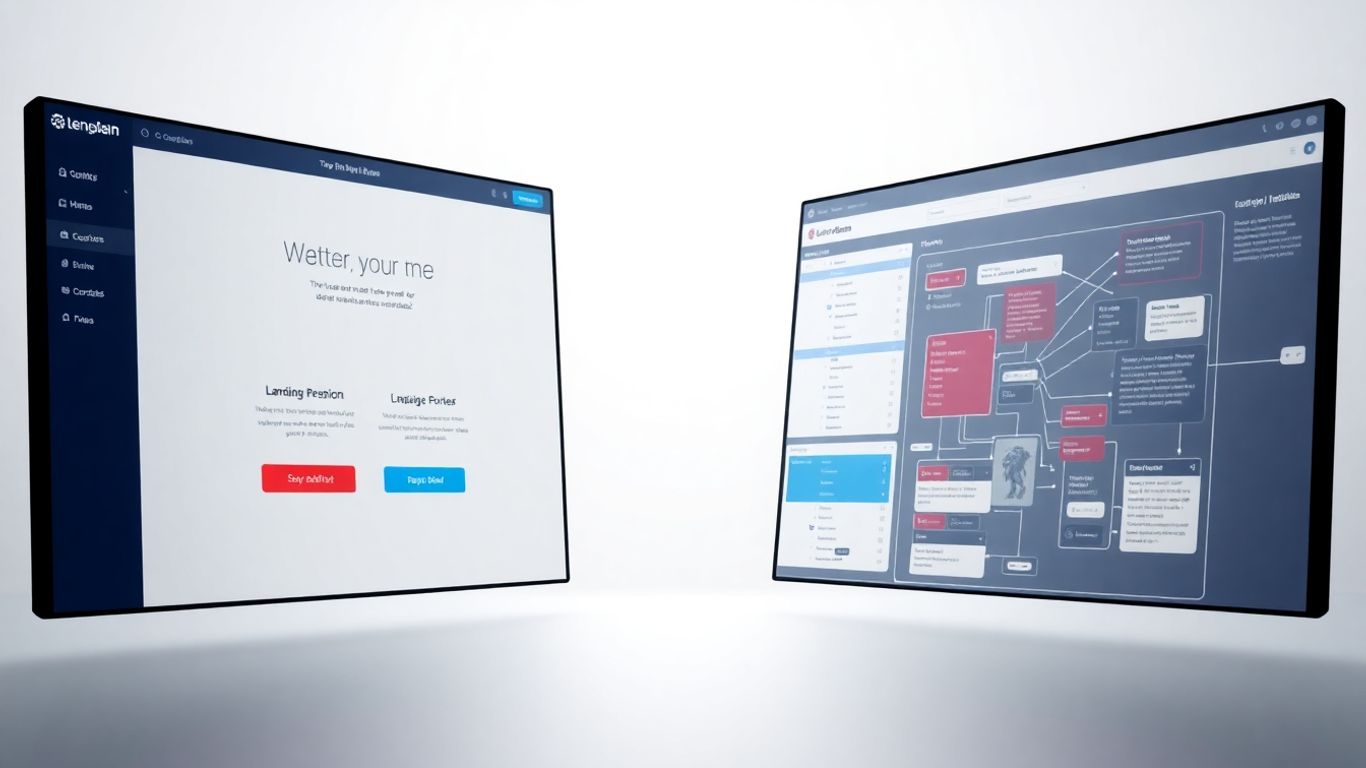
When you’re choosing a landing page builder, it’s not just about how pretty the pages look or how easy they are to make. You also need to think about how well they actually work and how they fit into your existing marketing setup. This means looking at things like how fast your pages load and if they play nicely with all the other tools you use.
0011.digital can design, build, and optimize Unbounce landing pages for your campaigns, including setup, integrations, and A/B testing.
Contact us.Mobile Responsiveness And Page Load Speeds
These days, most people are browsing the web on their phones. So, your landing pages absolutely need to look good and work perfectly on any screen size. If a page is a mess on a mobile device, people will just leave, and you’ll miss out on potential customers. It’s that simple.
Beyond just looking right, how fast your page loads is a big deal. Studies show that if a page takes too long to load, visitors get impatient and click away. This is especially true for mobile users who might be on slower connections. A slow page can really hurt your conversion rates. Some builders are better than others at making sure their pages load quickly. You’ll want to check out how they handle this. For instance, Unbounce uses a special engine called the Thor Render Engine to make sure post-click landing pages load fast, which is a pretty neat feature [3d53].
Seamless Integration With Your Marketing Stack
Your landing page builder doesn’t live in a vacuum. It needs to connect with your other marketing tools, like your email marketing service, your CRM, and your analytics platforms. If you have to manually move data between systems, it’s a huge time sink and opens the door for errors. You want a builder that can automatically send leads to your CRM or track campaign performance in your analytics software.
Think about what tools you’re already using. Does the landing page builder you’re considering have built-in integrations for them? Or does it at least support common integration methods like Zapier? Having these connections work smoothly means you can focus more on your marketing strategy and less on the technical bits. It’s about making your whole marketing operation run more smoothly.
Analyzing Performance Metrics And Analytics
Once your pages are live, you need to know how they’re doing. This is where analytics come in. You’ll want a builder that provides clear, easy-to-understand data about your visitors. What are they doing on the page? Where are they coming from? Are they converting?
Look for builders that offer:
- Clear dashboards showing key metrics.
- The ability to track conversions accurately.
- Tools for understanding visitor behavior, like heatmaps or session recordings.
- Easy ways to export your data for deeper analysis in other tools.
Understanding these numbers helps you figure out what’s working and what’s not, so you can make improvements. For example, Unbounce offers tools for testing and measuring landing page performance, which is pretty handy for making data-driven decisions [93d6].
The best landing page builders will not only help you create pages quickly but also provide the insights you need to make them perform better over time. It’s a cycle of building, measuring, and improving.
Pricing Structures And Return On Investment
When you’re looking at landing page builders, the cost is definitely a big part of the puzzle. It’s not just about the sticker price, though; you’ve got to think about what you’re actually getting for your money and how that translates into results for your business. Understanding the different pricing models will help you make a smart choice that fits your budget and your goals.
Most platforms offer a few different plans, and they usually scale up with more features, higher visitor limits, or more advanced tools. It can get a bit confusing with all the options out there, so let’s break down what you might see.
Comparing Cost-Effectiveness Across Platforms
It’s easy to get caught up in the monthly fee, but true cost-effectiveness comes from how well a tool helps you achieve your marketing objectives. A cheaper tool that doesn’t convert visitors into leads or customers is actually more expensive in the long run than a pricier one that drives significant revenue. You’ll want to look at what’s included in each tier. For instance, some builders might charge extra for features like A/B testing or advanced analytics, while others bundle them into higher-tier plans. It’s worth checking out platforms like Landingi which offers a good range of features even at lower price points.
Here’s a general idea of what you might expect:
- Free Plans: Great for testing the waters or for very small projects. They often come with limited templates, fewer features, and lower visitor caps.
- Starter Plans ($20-$50/month): These are usually a good starting point for small businesses. You’ll get more templates, basic customization, and decent visitor limits.
- Professional Plans ($50-$150/month): As your business grows, these plans offer more advanced features, better analytics, and higher usage limits. This is often the sweet spot for many growing companies.
- Enterprise Plans ($150+/month): For larger organizations with complex needs, these plans provide premium support, unlimited features, and the highest usage caps.
Understanding Visitor Caps And Usage Limits
This is a big one that often gets overlooked. Many landing page builders limit the number of unique visitors your pages can receive per month. If you exceed this limit, you might get charged extra, or your pages could go offline. It’s really important to estimate your expected traffic before you commit to a plan. If you’re running a big ad campaign, you could easily blow past a low visitor cap. Always check the fine print on visitor limits, form submissions, and even the number of landing pages you can create.
Be wary of platforms that have very restrictive limits on core functionalities. You want a tool that grows with you, not one that penalizes you for success.
Maximizing ROI With Your Chosen Builder
To really get your money’s worth, you need to use the builder effectively. This means:
- Utilizing A/B Testing: Don’t just set up a page and forget it. Test different headlines, images, and calls to action to see what performs best. This is how you squeeze more conversions out of the same amount of traffic.
- Leveraging Templates Wisely: Start with a template that’s close to what you need, but don’t be afraid to customize it. A well-designed page that’s relevant to your offer is key.
- Integrating with Your Tools: Make sure your landing page builder works well with your CRM, email marketing software, and analytics platforms. This creates a smooth workflow and gives you a clearer picture of your results.
Ultimately, the best landing page builder for you is the one that helps you achieve your business goals without breaking the bank. It’s a balance between features, usability, and cost, all aimed at driving better results.
Making The Right Choice For Your Business Needs
So, you’ve looked at the features, compared the pricing, and maybe even taken a few free trials. Now comes the big decision: which landing page builder truly fits your business? It’s not just about picking the one with the most bells and whistles; it’s about finding a partner that aligns with your specific goals and can grow with you.
Aligning Features With Your Specific Goals
Think about what you’re trying to achieve with your landing pages. Are you focused on generating leads, driving e-commerce sales, promoting an event, or offering content downloads? Your primary objective should guide your choice.
- Lead Generation: If capturing leads is your main aim, prioritize builders with strong form capabilities, easy CRM integration, and good lead tracking. You’ll want tools that make it simple for visitors to give you their information.
- E-commerce Sales: For selling products, look for platforms that handle payment processing smoothly, offer attractive product showcase templates, and integrate with shopping cart systems. Speed and a clear path to purchase are key here.
- Event Promotion: If you’re promoting an event, features like event-specific templates, countdown timers, and calendar integrations can make a big difference.
- Content Downloads: For offering gated content, look for builders that support this functionality and can integrate with your email marketing to deliver the content automatically.
The most effective landing page builders don’t just look good; they are built with a specific purpose in mind. Ensure the features you’re paying for directly support the actions you want your visitors to take.
Considering Long-Term Scalability And Growth
Your business isn’t static, and your landing page builder shouldn’t hold you back. Consider where you see your business in a year, or even five years. Will the platform you choose today be able to handle increased traffic, more complex campaigns, or a larger team?
- Visitor Caps and Usage Limits: Pay close attention to how many visitors, leads, or pages are included in each plan. A builder that seems affordable now might become expensive if you outgrow its limits quickly.
- Team Collaboration: If you have a marketing team, look for builders that offer user management and collaboration features. This prevents bottlenecks and keeps everyone on the same page.
- Integration Ecosystem: As your marketing efforts expand, you’ll likely need your landing page builder to connect with more tools. A robust integration library means you won’t have to switch platforms later.
Final Thoughts On Unbounce Vs Others
Ultimately, the
Wrapping Up Your Landing Page Builder Choice
So, you’ve looked at Unbounce and its competitors. It’s clear that while Unbounce has been a solid choice for a long time, the landscape of landing page builders is always changing. Newer tools are popping up with slicker AI features, faster building times, and sometimes, better prices. When you’re picking the right tool for your business, think about what you really need. Do you want super-fast AI page creation, or is a robust drag-and-drop editor more your style? Consider your budget, how easy it is to use, and if it connects with the other tools you already use. Ultimately, the best builder for you is the one that helps you get your message out there and convert visitors without a lot of hassle. Take your time, try out a few options, and find the one that just feels right for your projects.
Frequently Asked Questions
What makes a landing page good?
A good landing page is like a helpful salesperson. It clearly shows what you’re offering, makes it easy for people to understand, and guides them to take a specific action, like signing up or buying something. It’s simple, focused, and looks good on any device.
Why do people use landing page builders?
Landing page builders are tools that help you create those special web pages without needing to know how to code. They offer ready-made designs and easy-to-use tools, so you can build pages quickly to promote your products or collect contact information.
What’s the main difference between Unbounce and other builders?
While Unbounce is a strong tool, newer builders are often praised for being faster to use, having smarter AI features that help create content, and sometimes offering more affordable plans. Many people are finding these newer options better fit their needs and budget.
How important is AI in landing page builders?
AI, or artificial intelligence, can be a big help. It can suggest text for your page, help design it, or even figure out which version of your page visitors will like best. This means you can create better pages faster and with less effort.
What should I look for when choosing a builder?
You should consider how easy it is to use, if it has templates you like, if you can test different versions of your page (like A/B testing), if it connects with your other marketing tools, and if the price fits your budget. Also, make sure the pages look good on phones and tablets.
Are there good alternatives to Unbounce?
Yes, absolutely! Platforms like Landing and Leadpages are popular choices. Landing is known for its strong AI features, while Leadpages is often recommended for small businesses due to its user-friendliness and cost. There are several other great options available too.
0011.digital can design, build, and optimize Unbounce landing pages for your campaigns, including setup, integrations, and A/B testing.
Contact us.